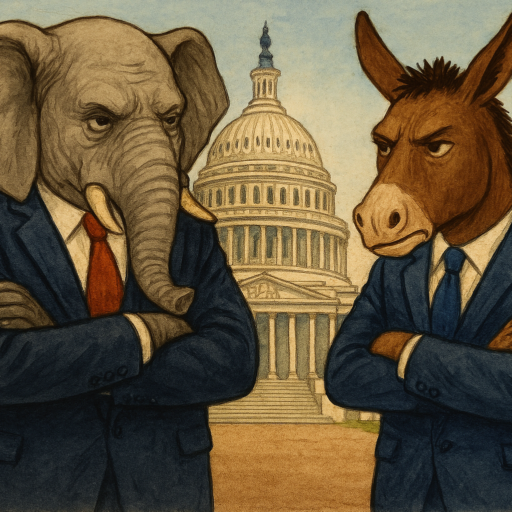
In 2026, the Republican and Democratic platforms reflect two sharply different visions for the country. Generally, Republicans focus on national sovereignty, individual liberty, and free-market capitalism, while Democrats prioritize social equity, government-led environmental action, and expanded public services.
Here is a breakdown of the primary differences across the major policy pillars:
1. Economy and Taxation
- Republican Platform: Advocates for supply-side economics, emphasizing deregulation and permanent tax cuts (such as the extension of the Tax Cuts and Jobs Act). The party favors “America First” trade policies, including high tariffs on imports to protect domestic manufacturing.
- Democratic Platform: Focuses on “middle-out” and “bottom-up” growth. They support higher taxes on corporations and high-income earners to fund social programs. They prioritize strengthening labor unions, increasing the minimum wage, and providing subsidies for housing and childcare.
2. Healthcare and Social Safety Nets
- Republican Platform: Generally seeks to repeal or significantly overhaul the Affordable Care Act (ACA) in favor of private-market competition. They emphasize protecting Social Security and Medicare through fiscal reform, though they often oppose expanding these programs into “universal” systems.
- Democratic Platform: Aims to protect and expand the ACA, often proposing a “public option” to compete with private insurance. They view healthcare as a right and advocate for lowering prescription drug costs through direct government negotiation with pharmaceutical companies.
3. Energy and Environment
- Republican Platform: Promotes “energy dominance” through the expansion of fossil fuel production (oil, gas, and coal). They view many environmental regulations as “job-killing” and often support streamlining the permitting process for pipelines and mining.
- Democratic Platform: Centers on a transition to clean energy to combat climate change. They support heavy investment in wind, solar, and electric vehicle infrastructure, and they favor strict emissions regulations to meet international climate goals.
4. Immigration and Border Security
- Republican Platform: Prioritizes border enforcement and “law and order.” Key goals include completing a border wall, ending “catch and release” policies, and carrying out large-scale deportations of undocumented immigrants.
- Democratic Platform: Supports comprehensive immigration reform that includes a pathway to citizenship for long-term residents (like “Dreamers”). While they support border security, they emphasize managing migration through legal channels and addressing the root causes of migration.
5. Social and Cultural Issues
| Issue | Republican Stance | Democratic Stance |
| Abortion | Generally “Pro-Life”; supports state-level restrictions or a federal ban. | “Pro-Choice”; seeks to codify reproductive rights into federal law. |
| Gun Rights | Strong support for 2nd Amendment; opposes most new gun control. | Supports “common-sense” gun laws, such as universal background checks and bans on certain firearm types. |
| LGBTQ+ Rights | Focuses on “parental rights” and often opposes gender-affirming care for minors. | Advocates for the Equality Act and protections for transgender individuals. |
| Education | Supports school choice, vouchers, and local control over curriculum. | Supports increased funding for public schools and student debt relief. |
Key Context for 2026
With the 2026 midterm elections approaching, the Republicans are largely focused on defending the policies of the current administration, particularly regarding the economy and border security. Meanwhile, Democrats have organized around “affordability” (housing and groceries) and protecting democratic institutions.